Growing Old with Boots the Dog

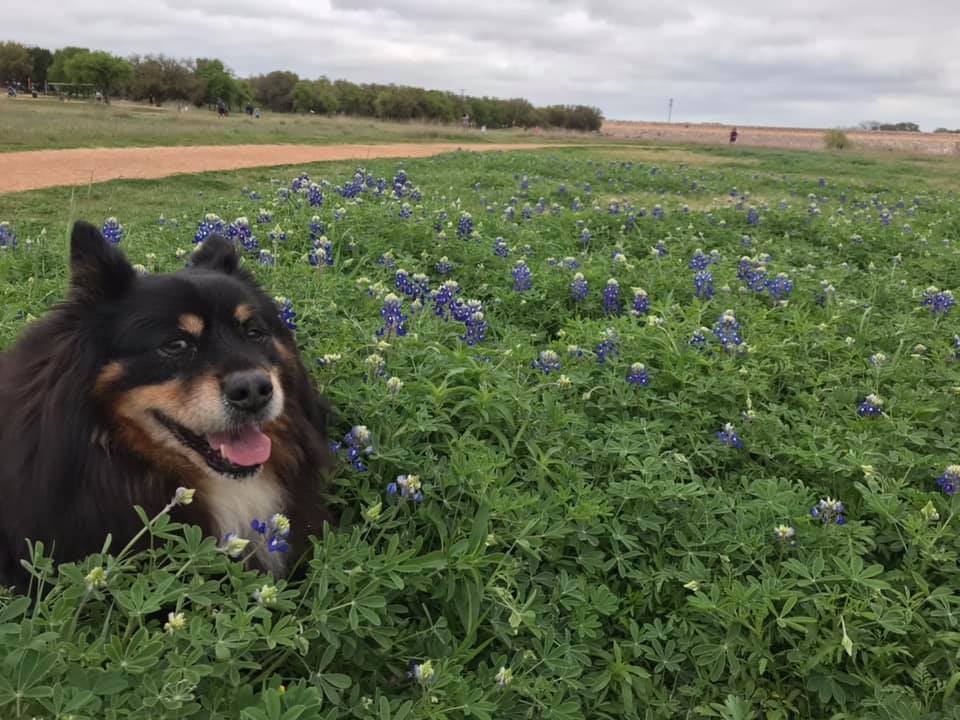
FeaturedBoots the Dog In Bluebonnets

He is old now but once he was young,
Our Bernese-Chow Boots with the big red tongue,
We got him the day when I was really sick,
So, my wife and daughter said we better get him quick,
Because Dad won’t notice while he is asleep,
We can bring him in the back while he is snoring deep.

Later that day from my slumber I awoke,
And from surprise and pneumonia, I thought I’d choke.
I said what’s this dog that looks like a bear,
And when he sheds, you’ll need to clean up his hair.

But Kendall begged to keep our dog-bear Boots.
“I need a friend since Kyle is leaving, and isn’t he cute?”
I said OK, but keep him out of my way,
Because at that time I was all work, and no play.

But later I found that Boots was just like me,
We both loved my wife and the family,
And I was overweight and looked a bit like a bear,
We both had heart problems, so we had to take care.

My wife took us for walks, last chance workouts, we called it,
Because both Boots and I had to get fit.
And as we trained and struggled, we both got better,
Boots in his long hair and I in my sweater,
And I came to love that dog who was just like me,
Who loved nature, birds, and especially trees!

The years grew long and both of us got old,
Our joints got creaky, and our noses cold,
But Boots had one last lesson to teach,
One of patience and love, that we often preach –
But Seldom Do.

For you see Boots is now older than 102,
But his love is pure, and his heart is true,
He circles the house to grasp one more day,
And sometimes barks, when it is not OK.

But I have grown to love him and feel blessed,
To have one more day to clean up his mess,
With our dog Boots, who is just like me,
A cherished member of our family.

Don Grier
Boots the Dog In Bluebonnets
Boots loves nature, birds, and especially trees!

Navigating Life Between Epiphanies

Featured

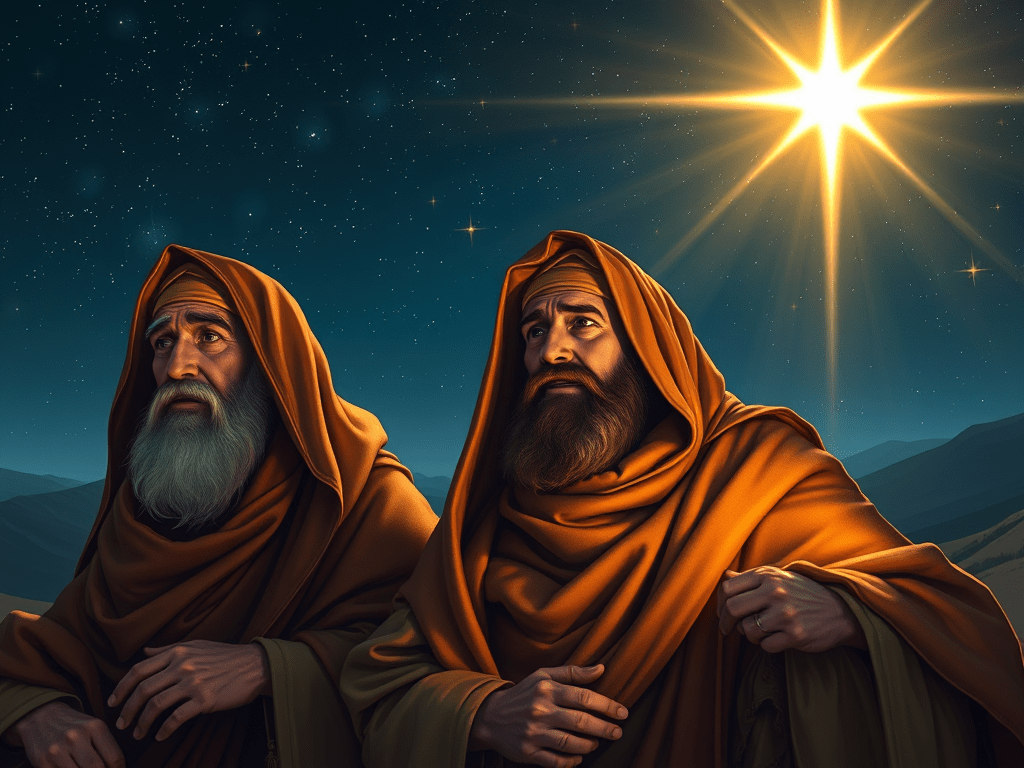
Last Sunday was the feast of the Epiphany, the typical ending of the Christmas season. In this context, the Epiphany is defined as the manifestation of Christ to the Gentiles represented by the Maji (the Three Kings).  I wonder what the Maji felt as they returned to their homeland and got further and further away from the Christ child and the Star of Bethlehem. Did they feel sorrow and sadness, or did the knowledge of the epiphany spur them to greater spiritual heights?

The epiphany
We Live Life Between Epiphanies

Epiphany has a second definition in the secular sense. It means a sudden revelation or insight. For example, you can imagine Thomas Edison saying, “I had an epiphany after inventing the first light bulb,” or Alexander Graham Bell’s excitement when he first heard the voice over the telephone. It is easy to be motivated while you’re having an epiphany or leading up to a new insight. But most of our lives happen in between epiphanies. What you do in between inspirations leads to a meaningful life.

Today’s blog is all about what we do in between epiphanies. How do we discern and discover our next great insight? What are the steps that we follow to reach that next epiphany? How do we remain hopeful and motivated in between the high points?  Most importantly, how do we prepare for the final epiphany that occurs only in our passing? You can read related blogs here and here.

Searching for Your Next Epiphany

The wise men did not go blindly in search of the prophesized King. Instead, they read the charts to find the Star of Bethlehem, their North Star that led to the Epiphany. Similarly, ship captains look for the North Star to orient them North correctly. 

Finding your next North Star is equally vital as you navigate life’s trials. The best way to determine where to go next is by reflecting on your last peak experience.  What about your previous highlight made you fulfilled and on the right track?  How do you build on that insight to raise yourself to a higher level?

Here is an example.  In 2015, I had a clear North Star.  I had to lose weight and get healthy to support my family and team.  I reached my goal of losing 150 pounds, which was both exhilarating and worrisome.  After achieving the goal, I could have had a letdown after the initial high. 

Instead, I decided to build on what I had learned and pay it forward to others.  Also, I understood that although I had improved my body, my soul still needed work.  So, I made a goal to apply the lessons I learned in meeting my health targets to improve my soul.  I established targets for prayer and ways to display kindness to others. 

Once you have determined your North Star, you need to envision it.  Develop a Vision Board, a series of pictures and text describing where you are going next, and keep it where you can see it daily.

Following Your New North Star

Identifying your purpose and next peak is step one.  Now, you need to make a plan to reach it.  Think of all the planning the wise men had to do to get to Bethlehem.  They had to secure Camels, provisions, and equipment for the long journey.  They also had to adjust to the sandstorms that knocked them off their path.

You need to practice similar intentionality, planning, and adjustment.   Establish interim SMART goals to guide you on your journey.  SMART stands for Specific, Measurable, Achievable, Relevant, and Time-Bound.  Do not wander lost in the desert of irrelevance buffeted by the sands of discontent. Instead, like the wise men, they plan to reach the Epiphany at the appointed time.  And do not get knocked off-track by the occasional sandstorm.

Living the Mountain Top Moment

When you reach a high point, relish it. Live in the moment and learn from it to carry on during the low periods. 

Again, take the example of the Three Kings. They took the time to pay homage to Jesus and presented gifts of honor and thankfulness. They also used their experience to change their lives. The Bible records that they returned to their land by a different path, avoiding Herod. Also, the Epiphany and its memory sustained them on their long journey home. 

It also changed their direction in life.  After the Nativity visit, the three kings lived a virtuous life.  Legend has it that they were instructed and baptized by St. Thomas the Apostle in his travels to the East.

The Magi’s experience after the Epiphany has important lessons for us as we savor a high point and then return to everyday life.  First, celebrate your achievement and take time before moving on to the next thing.  Second, distill the lessons learned from your peak and use them as fuel for the road.  Lastly, when you hit a roadblock to your next destination, recall your Epiphany to provide hope and faith.

The Last Epiphany

As we travel our earthly road, one thing should guide our direction while we live between Epiphanies—the last revelation.  The life we have lived and the kindnesses we have shown will be measured when we see God face to face.  This final road may be long and hard for our bodies, but our souls can strengthen until we reach the everlasting Epiphany.

Celebrating Christmas – Faith and Togetherness in Crosswicks

FeaturedCrosswicks Sign

Christmas is meant for community. Each year, the light that comes into the world brings us together. This joy is to be shared among friends, family, and neighbors!   

I remember sharing this joy and love in my hometown of Crosswicks, NJ.  Here is a picture of Main Street blanketed in snow.  It got me dreaming of Christmas in Crosswicks.

Snow covered street in Crosswicks during Christmas

Picture of Main Street Crosswick by Katherine Caldwell

I am never tired of thinking of Christmas in my hometown.   The snow glistens in the trees.  The 100+ year old Christmas tree bursting into light!  Neighbors singing Christmas Carols around a bonfire and later warming themselves with hot apple cider.  The candlelight service in the 200-year-old Quaker Meeting House.    There are four main reasons Christmas in Crosswicks is unique and makes the holiday shine brighter.   

Christmas in Crosswicks is Historic

Crosswicks was settled by Quaker immigrants in 1677, and  Christmas celebrations and worship have been ongoing ever since. The Quaker Meeting House, which still stands and holds the annual Candlelight service each Christmas, was built in 1773. It even held the ceremony during COVID, except it went virtual, keeping the tradition unbroken. 

The Christmas of 1776 is particularly noteworthy. Colonial troops occupied Crosswicks under General Cadwalader in preparation for the historic Battle of Trenton, one of the turning points of the Revolutionary War.   

Crosswicks celebrated the 105th lighting of the large Christmas tree in the Quaker fields near the Community House.  To see the magic, look at this link for this year’s virtual ceremony. 

One last Christmas moment relates to a historic building three buildings from my home.  Brick’s Mincemeat Factory was built in 1879 and, until 1968, was the state’s largest producer of mincemeat.  It is now a historical building but still holds special memories of the mincemeat pies we had each Christmas.

The historic nature of Christmas in Crosswicks makes it special but not necessarily unique. I encourage everyone to learn more about the history of your town related to Christmas.

Sharing of Faith and Fellowship

Crosswicks had diversity when it came to faith and denomination.  I have already mentioned that Quakers founded the city, and the candlelight service at the Quaker Meeting House is a fixture of the holiday season.  However, one of the things that I remember most about the holiday season is learning about Hanukkah at my elementary school each year.  I still remember the dreidel song taught to us by one of my friend’s mother. Hanukkah was also the Festival of Light, represented by the menorah. 

We also had the United Methodist Church, which my good friend attended. I would sing songs like “Go Tell It on the Mountain” with her father, a retired Methodist minister, that we did not usually sing in my Catholic Church. 

We also had the historic Grace African Methodist Episcopal Church, organized in 1868 and located three buildings down the street from my house. I remember the Christmas hymns of joy echoing forth from the Church. We of Crosswicks were of different faiths and denominations, but we shared our beliefs and joy openly during the season.

Joining in Civil Community 

We also joined each holiday season in the civil community.  Our family joined our fellow “Crosswicksians” each year in the annual bonfire and Christmas Tree lighting.  We would all circle the tree at the Community Center and sing Christmas Carols, both secular and religious.  Voices rose together as one community, and we sang of hope and love! Later, we drank hot apple cider, ate donuts, and shared fellowship about the encroaching holiday season.  To close the day, Santa Claus would ride on the back of the firetruck and toss candy to all of us.  It was all a kid could want!

Exploring the Wonders of Winter with Friends

After all that candy, cider, and donuts, we needed an outlet to burn off the calories.  Our rural town (imagine that in Jersey) offered many options in the winter months. 

No Netflix for us! We grabbed our skates and went skating on the Frog Pond behind the library, or better yet, we sled down “the Hill” behind the old Firehouse. I remember leaving the house at 8 a.m. some days and not returning until 9 p.m. The only breaks were a grape soda and candy at Applegate’s Market. 

We even exercised when getting our Christmas Trees. There was no Papa Noel’s or Walmart for us. We went with our Dad to cut down a tree at Nicholson’s Tree Farm. I am envious of my cousin since she still lives down the street. 

In closing, Christmas in Crosswicks was full of faith, fellowship, and fun.  That is why, some forty years later, I still dream of Christmas in the Crosswicks.  You may be dreaming of Christmas in your hometown.  Christmas in recent years, especially during Covid, feels different from the past.  We may congregate again but sometimes stand apart from our fellow citizens.  And even when in proximity, we sometimes rip each other apart with cutting remarks. 

For some, the light of Christmas may seem a bit dimmer in recent years.  And, despite our best efforts to set our homes alight like the Griswolds, we cannot capture the brightness of a smile or the warmth of a human touch.  Light does not come from a bulb! Instead, it comes from hearts joined by the joy of Christmas! 

Say a prayer for someone in need.  Donate to a charity.  Most of all, we should honor the light that has come into the world with worship and kindness for all.  Until next year, I have been dreaming of Christmas in Crosswicks.  Let me close with a song.  

Christmas in Crosswicks

I am dreaming of Christmas in Crosswicks,
Just like the ones I used to know,
Where people got together,
In all kinds of weather,
To watch the Christmas tree aglow!

I am dreaming of Christmas in Crosswicks,
And the bonfires in the night,
May all your memories be bright,
And when we cross the wicks with neighbors,
we bring more light!

If you enjoyed this blog, you may want to hear it and similar messages in the Change Well Podcast by clicking this link. If you are looking to improve your wellness or your that of your team, check out my other blogs at these two links: https://weightlossleadership.com/ or https://wellnessldr.com/blog/.

Yoked to Jesus: Finding Strength Through Adversity

Featured

Plowing the Hills of Calvaro

Introduction

This a parable story suitable for middle school students and above about the following excerpt from Matthew 11: 28-30.  Questions follow. 

28  “Come to me, all you who labor and are burdened, and I will give you rest.

29   Take my yoke upon you and learn from me, for I am meek and humble of heart; and you will find rest for yourselves.

30  For my yoke is easy, and my burden light.”

Story and questions copyright 2024 Don Grier.

The Yoking

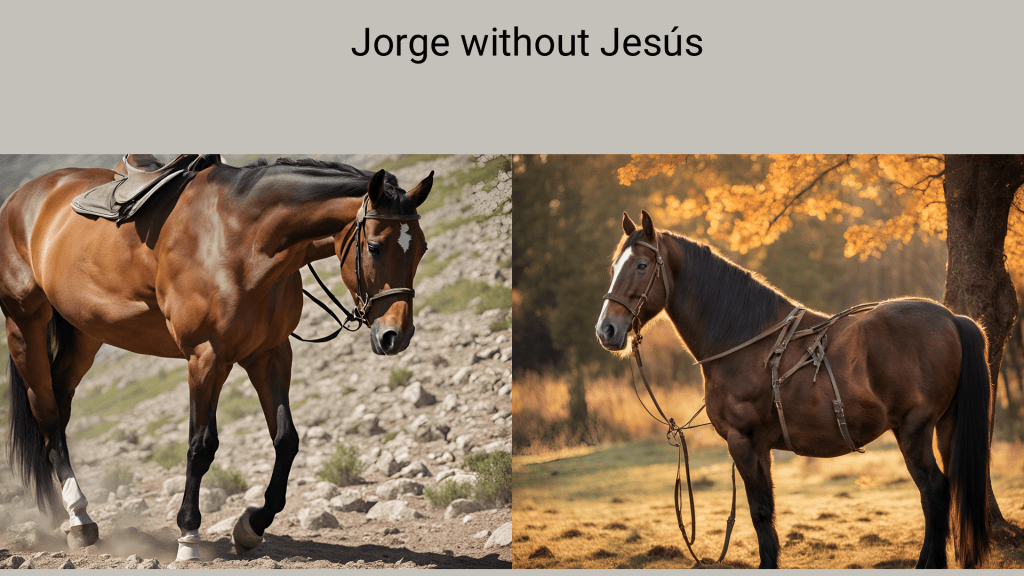
I remember the conversation as clearly as yesterday when I was told that Jesús and I would be harnessed together for the plowing season. 

“I can’t believe Farmer Hector yoked me to old Jesús,” I neighed to my friend Buck.  “What is the Farmer thinking?  Does he want to plow the pasture all Spring? To leave the pasture fallow at harvest time.  I thought he would pick someone young and strong like you, Buck, or Diablo since we would get it done quickly.  What is he thinking?”

Stumble then Learn

But in hindsight, I was wrong! Jesús slowed me down initially when I was galloping too fast.  But I soon realized slower was better in the rocky pasture, where stones can splinter a hoof, as I did one brisk morning when I felt frisky.  But to my surprise, old Jesús pulled us long and more than made up for my injury during the days I was recovering.

After I was healed, I was ready and raring to go. Jesús, let me plod on, seeming to take no interest in our work.   He let me carry a good bit of the load since I had learned my lesson about the rocks and looked to avoid them. It tested my patience and resilience, but I was determined to do my best. 

Jesús’s seeming lack of interest worried me as we approached the Hill of Calvaro.  With the end of spring coming, we had just a few days left to get the plowing done. Farmer Hector loved to terrace the hill because the crops grew better in the cooler climate. 

Climbing the Hill of Calvaro

Jesús again surprised me as he picked up the pace. It took both of us to pull up that devilish hill. I saw Jesús matching my steps and pulling me forward when I faltered. The last drive took all Jesús had, but he did not complain as he lay panting and heaving.  Until, at last, his heart gave out just as we crested the Hill of Cavaro.  Farmer Hector buried him there where he fell, on that hallowed hill.  Jesús died at 33 years, a ripe age for a plow horse.

The Lesson

A few days later (three, I think), Farmer Hector and I stopped at a lake before returning to the homestead. We looked up and were amazed.  In the deep blue sky was one lone cloud shaped like old Jesús.  Farmer Hector said under his breath, “Could it be?”  He just shook his head doubtfully.  But I could have sworn, in the whispering wind, I heard Jesús whinny, “Remember.” 

And I have tried to remember!  I may not be as patient and as strong as old Jesús.  Nor has the harvest from the fields I have plowed ever matched our harvest that Autumn.  But I try as best I can to impart the lessons that I learned while yoked to Jesús.

Questions

1. Think of a time when you did something without Jesus by your side. How did that turn out?

2. Now, how about a time when Jesus carried the load for you?

3. Have you ever thought that Jesus was no longer with you? In hindsight, was that a time for growth?

4. What crosses do you have, and how might walking yoked to Jesus help you?

A Weave of Life Lessons This Election Day

Featured

Today, I have a lot on my mind. It is the 22nd anniversary of my Dad, Big D, passing, and it is election day.  So, in honor of my Dad, to celebrate our democracy and organize the many thoughts in my head, I will attempt what former President Trump calls the weave.  

My definition of the weave is connecting several lines of disparate thought to develop a consistent theme.   Today’s weave will hopefully create a tapestry of life lessons that lead to wellness.  The thread that ties this weave together is the many lessons I learned from my father and how they have helped me become a better person.  So, let’s start weaving.

Big Russ and Me

I find myself missing Tim Russert this election day. Tim Russert was and still is my favorite journalist. He was the epitome of authenticity and enthusiasm for our democracy. The longtime host of Meet the Press, he was thorough, insightful, and always civil but challenging in his questioning.  I used to watch Meet the Press every Sunday but now seldom watch Sunday news programs.

Another reason I miss Tim Russert is his dedication to family. He wrote one of my favorite memoirs, Big Russ &  Me, about his relationship with his father, Big Russ, and the lessons he learned from him. 

Big Russ and Tim’s relationship reminded me of my one with my Dad, Big D.   The similarities are uncanny. Both raised four children with their wives, did not finish high school, had blue-collar jobs, and served in the military.   Believe it or not, both worked on a Garbage truck.  But most importantly, they both taught life lessons that made their sons better people.

I will not write a book like Tim for this election day weave of lessons (although I could and will someday).  Instead, I will provide the top five lessons I learned from my Dad, resonating even more loudly 22 years after his passing.

Get the Iron Out of the Door.   

What is the iron? Where’s the door?  Iron refers to large turbines that generate electricity in dams.   Big D was a steelworker/machinist, and it was his job to repair the turbines and get them out the door as quickly as possible to their destinations worldwide.  Equally important was ensuring the turbines did not have to come back through the door: this required diligence, consistency, and hard work.    

The lesson is to learn your craft, roll up your sleeves, and work daily at your vocation and for your family.  For more on this lesson and how I applied it to my career in information technology, please read my blog, Getting the Iron Out the Door.

There is Always Room for Improvement. 

My dad was good at getting the iron out the door, but he was always looking for ways to make his team get it done faster, cheaper, and with higher quality. Likewise, he taught us that no matter how well you do, there is always room for improvement. 

He applied this lesson to his personal life.  As mentioned earlier, Big D and Big Russ had not graduated high school.  My dad left school to help his mom and family and entered the Air Force. He got his GED, machinist journeyman certification, and further education in a community college. 

I remember him returning after overtime at DeLaval and practicing the words fuma and puma in Spanish very intently.  Over 50 years later, I can still hear him practicing to better communicate with his fellow union workers. 

One more story about improvement from this lesson.  Improvement does not come quickly.  You must make slow, steady practice.  Big D  demonstrated this aspect by building a lake on his retirement property. 

I remember the first time my Dad started building the lake.  He had just got the backhoe and had begun scraping out a ditch.  He took my brother and me out there.  Then, pointing to a muddy gouge with a few puddles, he said proudly, “Look at my lake!”. 

My brother and I started laughing.  Dad said, “Why are you laughing?”.  My bother pointed out, “Dad, when you say lake, it connotates images of water!  This is not a lake. It is a puddle.”  Dad just shook his head, climbed in his backhoe, and said, “You will see smart alecks.” 

And we saw.  A year or two later, there was a full-fledged lake.  The following year, fish were in the lake and on a dock.  But Dad kept tweaking the lake up to the day he died. 

We wondered why he did this since he proved his point and gave us our initial lesson.   Having returned to the land recently with the direct coordinates in hand,  I found an aerial picture revealing he built the lake in the shape of Texas!  If you want to see the before and after pictures, read our blog, The Return: Have A Vision as Big as Texas.  And always look for ways to improve!

Be Tough, But Have A Heart.   

One area in which my Dad did not need much improvement was toughness. My brother tells a great story about my Dad at one of the campouts that Dad hosted for my brother’s fraternity.  Big D had fallen asleep too close to the fire, and one of his cowboy boots started burning!  The fraternity brothers shook my Dad awake, yelling Big D! Big D! Your boot is on fire.  Big D, not batting an eye, took off the boot, smashed it in the dirt, extinguished the fire, and said, “I am the toughest SOB that ever walked the face of the earth.” 

Big D was tough due to his childhood, but he still had a big heart. He taught us that you must be firm but fair and have a heart for others. I best learned this lesson when I ran away from home. 

When I was 16, I made the rash decision to run away. I was distressed that I was moving away from my home in New Jersey and losing my friends. I thought the world was ending, but really, it was only beginning.

I do not know how he knew where I was going, but my Dad found me. He told me that he was sorry and that I was tough. He then explained that we needed to move to Texas to make a better life. He then hugged me, and I got in the car. There was no yelling. There was only love. 

You can read more about this story and other lessons in the blog: The Lesson Learned When Running Away.

Be Part of the Community.

Another thing that my dad instilled in me was the power of community.  My dad was our Cub Master,  our baseball and basketball coach,  a Union Vice President, a softball player, and a member of several men’s clubs.    He also had diverse friends and included some of our friends in our family. 

I carry with me the importance of community. I am a leader or participant in several civic organizations. The lesson I learned from Big D about community was threefold.

First, he led or was present in our activities to be part of his children’s lives. Second, when you meet people face to face, it is hard to stay in an argument.  You can cast aspersions on someone on Facebook without truly facing them.  It is tough to hold a grudge or an argument when you have to see the person the following week.  Last, when we act in the community, we build others up instead of tearing them down.  We become stronger when we act as a team.

The First and Last Lesson – Be Thankful. 

Big D was always thankful for his community and friends and was unafraid to show it. I will miss the heartfelt prayers of thanks my dad used to say before Thanksgiving dinner. They were simple but profound and gave thanks for all that was given to our family. 

But I will never forget the first Thanksgiving without him and the miracle provided us in his remembrance. I recommend you read the full Thanksgiving Cows blog here, but here is a synopsis and the lesson. 

Two weeks after Big D died, we went to my dad and mom’s ranch one last time for Thanksgiving. The ten cows he was raising were all expecting.

As we rounded the bend, my family saw two new baby calves. During the rest of Thanksgiving, a new calf was born about every hour, so there were nine near dinner time. However, one cow, Rosie, had a problem birthing her calf.  

After much chasing and antics, we finally got Rosie in the truck and took her to the veterinarian.  We did not have Thanksgiving dinner, but I would not have missed the event for the best food in the world.

I had never seen a calf being born; it was a tremendous sight. The vet wrapped a rope around the half-born calf and pulled it. The calf was born after a few moments that seemed like an eternity. After lying on the ground for a few moments, the calf made its first few steps and was alive.

At that moment, despite missing Thanksgiving Dinner, I was never more thankful. I was grateful for my dad’s gift of the cows, and I was thankful for the timing and happiness that the calves’ birth gave me and my family.

Whenever I feel let down or frustrated, I think back to the story of the Thanksgiving calves. And that is a Game Changer. Counting your blessings can change your attitude to one of positivity. It can lift you out of the despair of failure and toward the hope of tomorrow. 

The End of the Weave, Hope for Tomorrow.

We close our weave by coming full circle to tomorrow’s election. Whether your candidate wins or not, let’s remember the lessons of Big D.  Wake up tomorrow to get the iron out the door and food on your family’s plate.  Look for ways to improve yourself and those around you.  Be passionate about your beliefs, but have a heart for those who may differ.  And most of all,  Join in community and be thankful for this great country.  We owe it to the legacy of Big D and Big Russ.

Be Good Not Great

A few nights ago, I had one of those dreams. You know the ones that I am talking about. A dream so vivid, so poignant that it seems more than real. A dream that wakes you up at 4 AM with a smile on your face and thoughts rushing so fast that you can barely keep up as you type on your cell phone in the bathroom with door shut so as not to disturb your wife. A dream of important messages heaven sent to shape your life and to pass on to others.

This image has an empty alt attribute; its file name is img_4655-1.jpg

In this dream, I was again in my Grandpop’s house on Melrose Avenue in Trenton, NJ.  And there was my Grandpop rocking on the porch.  The picture below is of that very same house that my sister Lori texted me today while she was visiting Jersey, reinforcing the dream’s importance!  As we walked together and talked in each of the rooms, the memories of times shared together came flooding back.  And there was an underlying message tying all those memories together.   My Grandpop – John William Henry – was a good man. 

I say a good man, not great man for a reason.  The best men are good men not great men.  They dole out love instead of striving for power or money.  They love their country and their God.  They care more about friends and less about prestige.  They take time for fun, the Phillies, and to sing Irish songs.  They look like Fred McMurray on My Three Sons and remind you of Jimmy Stewart on It’s A Wonderful Life.    That was my Grandpop!  And here are the four lessons that I learned from that dream, his life and my Grandpop’s home and heart.

Take time for Family and Friends (The Porch) – Grandpop loved to rock on his porch and look out on Melrose Avenue.  Two memories came back to me as I again sat on the porch.  I remembered how he would spend hours on the porch during the evening and weekends talking to and visiting with his neighbors down the street.  Some 50 years later, I can remember their names, their faces and believe it or not their homes.  During that dream, I visited with them again.  Mrs. Curr a widower who gave us tea and cookies in her home as she talked about her garden.  Mrs. Heipel who lived on the end house on Melrose talking about her daughter who had recently moved.  The Toronto’s telling stories of my mother when they were young.  I was happy for the friendship again and a little sad since my porch faces the back yard and I so seldom visit with my neighbors (or remember their names).

The other thing I remember is how gentle and good my Grandpop was.   He was no wimp having boxed when he was younger.  But he knew how to calm his Grandkids when they were cranky and tired.  I again saw him rocking my brother David as he sang “Little Man Your Crying” in a voice not as resonant as Bing’s but close to perfect due to its love.  And as I saw this image again in my mind’s eye, I thought back that although I spent quality time with my kids, I was not as calm or soothing as that gentle man who rocked my brother asleep

Love Others Unconditionally and For Eternity (the Living Room) – We came in from the porch and into the living room with its furniture entrenched in the fifties.   We sat on the couch watching the Phillies like so many times before.  We both loved the Phillies, especially Mike Schmidt (Schmidty as we called him).  In walked my Uncle who had gone missing for several months on another binge as he had done so many times before.  He was the ultimate prodigal son.  He asked to come back to the home and Grandpop with tears in his eyes took him back.  And I thought to the times when I turned my back on others in need because I was too busy and vowed to do better.   

The dream changed again to a different moment.  This one happened outside my other Uncle’s house in Morrisville, PA but in the dream, it was in the living room.  My family was visiting, and my Grandpop walked in with a bag of donuts as he did on most Sundays.  But this time it was different.  It was several weeks after my Grand mom’s passing and Grandpop had returned to the donut tradition for the first time without Grand mom.  I again saw the tear from my Grandpop’s eye when my brother asked where is Grand mom?  I was again a bit mad at my younger brother since I was older.  And I thought on how my Grandpop who was still a young man of 50 when Grand mom passed, yet he never dated seriously or married again.  He would visit his wife’s grave several times a week keeping the love of her in his heart for the rest of life.   And I imagined them again holding hands throughout eternity and I vowed to love my wife like Grandpop.

Be Frugal with Yourself, Lavish with Others (the Phone room).  I wanted to stay with both my Grandparents again, but my dream switched to the phone room.    I was not sure if the room was a formal dining room or a second living room, but I remember it as the phone room due to the rotary phone that rested at the end of a long hutch.  Another thing that rested on the long hutch was hundreds of coupons.  Having lived in the Depression, my Grandpop and his brothers were frugal in saving money.  I again saw my Grandpop and Great Uncle Don talking about the latest coupon that they found for Acme.  My Grandpop would drive to 5 or 6 stores to use the coupons to save a few bucks.  Besides being frugal on the groceries, he did not spend much on himself.  He seldom traveled or bought expensive clothes or items but reveled in the simple pleasures such as the occasional Phillies games.   He was frugal with himself but lavish with others.  As my dream progressed, I thought back on the time he bought my brothers and I a complete Lionel Train set on Christmas.  And how happy he was when our eyes lighted up.  Then I thought back on the many times I had splurged on the latest iPhone or Uber Eats instead of focusing on the ones around me.  I seldom use a coupon even though they are digital now and can easily be obtained on the cell phone I have.  I vowed to spend less on myself and more on others.

Be Thankful for the Simple Pleasures and Family (the Kitchen).   The dream now moved into the kitchen and I saw the big yellow wooden kitchen table where we often sat.  As I sat down at the table, I looked across to a little stand when my Grandpop kept one of his prized possessions – a Hot Dog Zapper!  I do not know if they have them anymore, but my Grandpop sure did take pleasure in it.  He would invite us to sit down and put each of the six hot dogs on two prongs at either end of the hot dog.  He would turn on the machine and after a few minutes of zapping they were cooked (and most often split open a bit!).  He again laughed as he took them off and gave one to each of us around the table. 

As we ate, more of my extended family gathered around and I realized the time had shifted to St. Patrick’s Day.  I again saw my Great Uncles (both cops), my Uncle John and his family, Uncle Gary and my family.  Each of the men had a Schlitz beer or two (I told you Henrys are frugal!) as we went through a chorus of Irish Songs – Mrs. Murphy’s Chowder, Come Meet a Donovan, The Same Old Shillelagh, and of course When Irish Eyes Are Smiling.  And I thought.  We often take for granted the simple pleasure of singing with family and friends.  We forget the expensive items we bought after a few years.  But I can sing verbatim every one of those songs to this day and see the hot dog zapper in my mind’s eye.  Just before I left this part of the dream, one more simple, glorious pleasure occurred.  My Dad did not know the Irish songs of his wife’s family but wanted to participate.  I again heard him sing “The Old Rugged Cross”, his favorite song and the one we played at his funeral.  As I wept, I vowed to spend more time with family and the simple pleasure of life.

And as I woke, one thought ran through my head.  Be good, not great!  Strive for friendship not fame.  Make memories not money to live on through eternity. 

In closing here is a poem that also came to me as part of this dream https://weightlossleadership.com/2019/08/01/be-good-not-great-poem/

Be Good to Your Family: John Walton

Featured

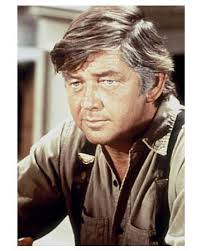
To date, the series has included only real people with whom I have directly interacted.  In this blog I focus on a person that I have interacted with since the seventies, but only through TV– John, the father on “The Waltons”.

For those not familiar with the series, “The Waltons”   ran for 9 years in the 70’s and early 80’s with specials continuing into the 2000’s.  It covers the trials and tribulations of an extended of family of 11 (John, his family, and John’s parents) living through the depression and World War II in the backwoods of Virginia.    The Waltons make it through those hard years of poverty and personal tragedy with their souls intact largely due to the sacrifices of John and his wife Olivia (who is equally deserving of being the subject of this blog). 

One of my favorite episodes of the series clearly demonstrates John’s focus on being good while foregoing opportunities for wealth and fame.  In the episode, John is uncharacteristically anxious and short with others.  His high school reunion is approaching and one of his fellow classmates want him to organize the reunion.  The classmate came to John because back in high school he and his classmate Grover where always vying for the lead position in the class.  Grover went on to Washington to lead an agency in the Roosevelt administration, while John stayed on Walton’s Mountain eking out a living for his family.  John becomes even more anxious when the person who was supposed to host the reunion cannot and John’s wife Olivia  agrees to host the reunion at the Walton home.

When the seemingly successful guests arrive, they all have problems.  Grover, for instance is having marital problems and his wife does not attend the reunion.  Another one of his classmates, a rich car salesman, has kids who act spoiled and misbehave throughout the reunion.  In contrast, the Walton children are the epitome of hospitality and work together to make the reunion a success. 

The show ends with what I considered the greatest quote from the show and one that highlights the difference between being good not great.  Grover, John’s former high school rival says the following: 

“Six years in grade school, five years in high school-everything I ever ran for, I was always running against the same Johnny Walton… The greatest day of my life was when I beat John Walton out for senior class president. I don’t think he ever lost any sleep over it. Now I’m an ambitious man – some would say successful; probably it’s all John’s fault. I was always running; he was always going past me at a walk. And here it is, 25 years later-here I am, and there’s John. Then look at me… and some of you… still running, still wearing ourselves to a frazzle for all sorts of things that John Walton has accumulated while he was out walking – a happy home, a fine wife and children. We’re sitting here well fed at John’s table, and I’m still boy enough to be graveled at the sight of him. ‘John – the boy most likely to succeed.’ Well, he’s the boy who did.”

This ending always gets me because it shows the choices a parent makes for his family.  There are so many episodes where John demonstrates his love for family over that of money of fame.  Here are three examples:

In one of the later episodes, John demonstrates his ability to organize competing, local sawmills in Virginia to deliver a large order for a rich government contractor.  Noting his ability, the contractor offers John the role of Vice President of lumber operations.  This job holds the promise of wealth, travel and a fine home.  The only issue is John would have to uproot his family.  He declines the role for the lesser opportunity of running a co-op in his hometown for a lot less money and prestige. 

One of the key attributes of a good father is being humble enough to accept the sacrifice of your children.  In another one of my favorite episodes, John and Olivia use all their emergency money to buy their son John-Boy, a new suit for college.  The whole family participates in the joyful event.  John is proud that he can provide clothes for his son to fit in with the wealthier students not on scholarship.  Then the family’s milking cow Chance dies and John is humbled since he does not have the money to replace it.  John Boy takes it upon himself to sell back his suit to pay for a new cow.  This action shows the goodness of his father John in two ways.  First, John-boy is following the example of sacrifice he has seen modeled by his father.  Second, John is humble enough after initial reluctance to accept the money.  John does what needs to be done even though it eats him up inside to provide his son this simple gift.  

In the last example, a developer comes to Walton’s Mountain and notes the beauty of the nature and a hot spring on the mountain.  FDR with his affinity for Hot Springs has raised the demand for these resorts and the developer offers John a lot of money for the mountain and his home.  He at first contemplates selling the land and moving the family but decides against moving the family, especially his parents from the home.  This episode clearly illustrates the sacrifices many sons and daughters make to care for their parents in their older years.  A good father indeed must first be a good son.

I could list at least another 20 episodes of the basic goodness of John Walton and his love for family.  Caring for your family and your spouse is what a marriage is all about!  A good parent thinks of their family first and career second.  Money and fame disappear, but a love of a good parent lives on! So, when facing a decision, let’s be like John and focus on what’s good for the family, rather than what is great for you!

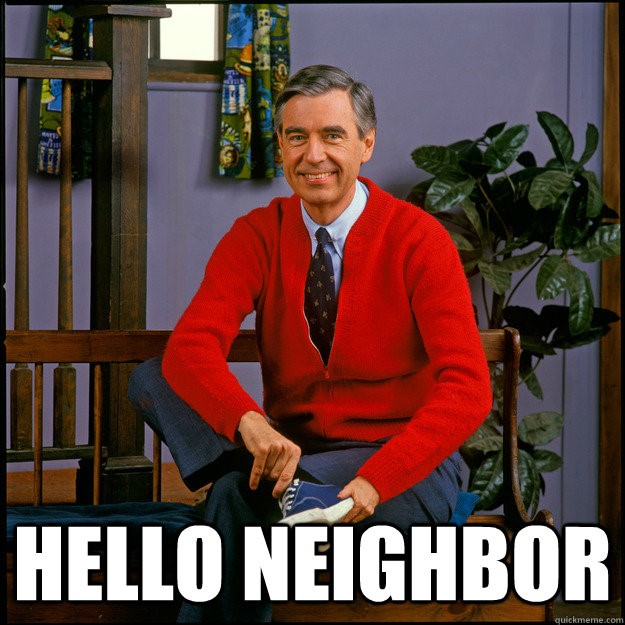
Be A Good Neighbor: TM

Featured

This is the fourth blog of the Be Good, Not Great series.  The initial idea for the blog series came to me in a dream about my Grandpop and resulted in a poem and a blog in less then an hour.  Read it hear. https://weightlossleadership.com/2019/03/16/be-good-not-great/

The series focuses on people that strive for goodness over greatness; who eschew money, wealth and fame to care for other people.

I still remember the first day at the first home my wife and I owned as if it were yesterday.  We moved into an established community in our then sleepy, now rapidly growing town.  The house was 70’s vintage and we were excited but a little daunted. 

We got the home for a good price.  But it did come with some things that we needed to fix.  The most urgent being a large bump in the sidewalk that led to our door.  The bump was due to a tree root that grew under one of the sidewalk panels.  It was a hazard especially for my wife who was pregnant with our second child and our 4-year-old.   I was ready to fulfill my duties as a husband, father and new home owner.

I had managed to lift the sidewalk a bit and was trying my best to cut off a portion with a small axe I had.  I was not making any headway and was sweating buckets.  When out walks a wiry, 60ish year old man with silver hair, from next door.

I stopped my work for a moment and greeted him.  he introduced himself and said, “I am TM your neighbor and son you looked like you could use some help!”  I said, “Hi Tim.  I am doing ok, but it is sure good to meet you”.    Which was wrong on two accounts. 

First because of his Texas twang, I called him Tim instead of TM.  This part was ok because he thought he heard TM due to my Jersey roots. Second, I was not Ok.  I had worked for an hour and made hardly a dent on the root.

After 15 minutes, TM returned with his own axe and said “Don, please let me help you out.  I have been doing this for awhile and we can knock it out together.”  Even though I was embarrassed I relented.  And I was glad I did.  TM immediately made more headway in 10 minutes then I had done in the last hour and a half.  When it was my turn to spell him, he let me use his axe and technique.  We got the root out and sidewalk level in less than 40 minutes together.  It was the start of a great friendship and mentorship.

TM was the perfect example of seeking goodness over greatness.  Born and bred in Leander, he moved to Cedar Park during its infancy to run one of the Cedar Yards for which the city was named. He was a great mentor, devoted husband for 68 years, loving father and a devout church goer.  You can read more about TM here. https://www.dignitymemorial.com/obituaries/austin-tx/thomas-pearson-7060600

There are four lessons from the life of TM to follow as we strive for goodness:

  1. Be a Good Neighbor.  The help with the tree root was just the first example of TM being neighborly. He was always there with a ready hand and a kind smile to help my wife and I with our expanding young family.  With both of us working, we did not always have time to keep the yard up.  When he saw us struggling, TM would take the time to mow the side of our yard closest to him or water some of plants when we did not get to it.  He also helped us with some ideas on landscaping and brought over some vegetables from his garden.  We in return tried to help him out, but never could match his generosity.
  2. Be a Good Family Man. TM was a devoted husband and father.  His only daughter was confined to a wheel chair after she was in an accident.   He and his wife helped care for her.  To make things easier, his daughter and her husband lived with TM.  TM had a specially outfitted van and helped with the medical visits and care.  He was always cheerful and willing to help. I also never saw a harsh word exchanged between the two couples despite the stress of living under the same roof. 
  3. Be a Good Mentor. TM was also always ready to pass the lessons of fatherhood to me.  One conversation stands out.  I was playing soccer with my son in our backyard and we were getting loud.  My son kicked the ball and it sailed into TM’s garden.  Instead of a harsh word, he handed over the soccer ball with a smile.  I told him I was sorry and asked him if we were bothering him by being too rowdy.  TM said, “You do get a bit loud, Don. but I know what you ae doing and you need to play with your son.  It is what they remember and how they learn so have at it!”  I try to remember that lesson when the two boys that are our new neighbors kick a soccer ball against our car.
  4. Take care of your community.  TM also reached out to the larger community.  His yard was an example to the whole community.  He also put on the best Christmas light show for many years.  Showing pride in your home and community inspires the same in your neighbors.   TM also sang and played guitar at his church.  He used his talents to the joy and betterment of those around him and the world is better for it.

We moved to a new home about a mile away in 2007.  Up to the end of our time next door, TM remained a good neighbor and friend.  Even helping us with fixing up the house for sale. Unfortunately, I did not follow his good example.  I got caught up with work and growing family and despite living only a mile or two away from him, we did not go to see him that often.  When he passed in 2016, I did not know until quite a bit later.  This is something I will always regret.

Robert Frost writes in his famous poem “Mending Wall” see full at this link https://www.poetryfoundation.org/poems/44266/mending-wall:

“Something there is that doesn’t love a wall,That sends the frozen-ground-swell under it,

And spills the upper boulders in the sun;

And makes gaps even two can pass abreast…

He only says, ‘Good fences make good neighbors.’

Spring is the mischief in me, and I wonder

If I could put a notion in his head:

Why do they make good neighbors? Isn’t it

Where there are cows? But here there are no cows.

Before I built a wall I’d ask to know

What I was walling in or walling out,

And to whom I was like to give offense.

Something there is that doesn’t love a wall,

That wants it down.’ I could say ‘Elves’ to him,

But it’s not elves exactly, and I’d rather

He said it for himself.”

I now know what does not love a wall.  It is not elves, it is God and his love.  Be like TM and not me!  Break down the walls of cell phones, work, and a busy life.  Take a sledgehammer to that wall, much like TM took an axe to that tree root and make time for your neighbor.  And above all, love your neighbor as yourself!