He taught with mirth and showered with love,
Preached to all about the one above,
Performed miracles, healing body and soul,
And pray to the Father, His name to extol.
But still, they would not listen!

He healed the leper, cured the blind,
All earthly possessions he left behind,
Forgave them all, both Sinner and Saint,
But still, they could not escape the taint
Of their collective sin from long ago.

He rode triumphantly through Jerusalem's gate,
And set in motion what was forever his fate,
He built a whip with a leather thong,
Upturned the carts, chastised the throng.
But they would not repent.

He prayed in the garden that his cup would pass,
But the Father told Him to show them at last,
So he carried the cross up Calgary Hill,
God's mission in mercy he had to fulfill.
And after he had arisen, some listened and believed,
I wrote this poem upon my brother’s passing. May it bring comfort as we remember all the saints and souls who have gone before us.
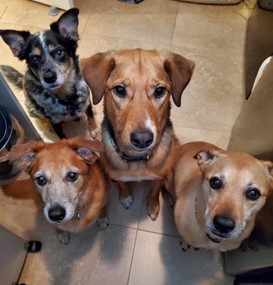
The poem tells the story of what the dogs my Brother David and his wife owned were thinking about in his absence.
Where is my Master?
Zooey looked at Sis, in that mischievous way, Where is our Master? I want to go out and play.
Our yips are a little less yippee, Our yaps a little less yappy, What happened to our Master, Who always made us happy.
He gave us kisses and never fleas. He let us do our business on his trees. What happened to him? Where did he go? And what happened to our Mom, She is moving rather slow.
Alvin pawed at Jasmine , And echoed what Zooey said. Where is our Master? who always patted our head.
He gave us snacks, And it was always a treat, When he let us wrestle, At the boots on his feet.
Where is he Jasmine? Where is he now? We got to help Mom, And find him somehow.
Then Sis looked at her siblings, And said with a sisterly grin. You can’t look for him outside, You have to look within.
For like our brother Ranger, He went to his Master above. Who entered the world one December, And showered it with love.
And he waits for us in Heaven, Again, leading the way. Where there will be no more sorrow, And all good dogs get to stay.
Then all four dogs were silent, As they turned inward and prayed, And in their souls they saw our Master, And again with their Dad David,
I am working on writing Christian poetry in sonnet form. While I am not William Shakespeare or Malcolm Guite, the form is good practice. Here is a Sonnet I wrote after facilitating a LifeTeen class on discernment.
Discernment
We wander while we wait for a pathway,
To guide us on and make directions clear.
A mission true, from which we will not stray,
A purpose strong, a goal to hold most dear.
But life obscures the place and final plan,
That makes our hearts leap high, and souls rejoice.
We struggle onward, lost in the hinterland,
Until we stop to hear God’s quiet voice.
Not shouts nor cries, but whispers in the night,
Instructing us with wisdom from above.
A path revealed, aglow in gentle light,
To lead us forth with purpose and with love.
So listen close, in stillness, let fears wane,
And follow where He guides, the path made plain.
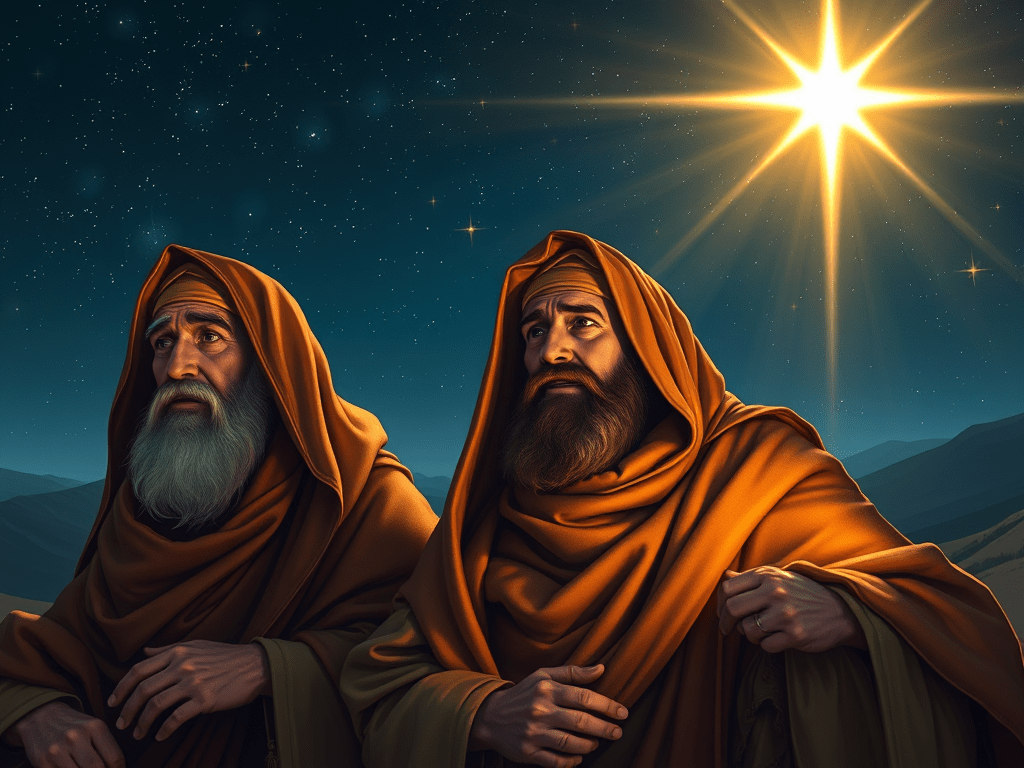
Last Sunday was the feast of the Epiphany, the typical ending of the Christmas season. In this context, the Epiphany is defined as the manifestation of Christ to the Gentiles represented by the Maji (the Three Kings). I wonder what the Maji felt as they returned to their homeland and got further and further away from the Christ child and the Star of Bethlehem. Did they feel sorrow and sadness, or did the knowledge of the epiphany spur them to greater spiritual heights?
We Live Life Between Epiphanies
Epiphany has a second definition in the secular sense. It means a sudden revelation or insight. For example, you can imagine Thomas Edison saying, “I had an epiphany after inventing the first light bulb,” or Alexander Graham Bell’s excitement when he first heard the voice over the telephone. It is easy to be motivated while you’re having an epiphany or leading up to a new insight. But most of our lives happen in between epiphanies. What you do in between inspirations leads to a meaningful life.
Today’s blog is all about what we do in between epiphanies. How do we discern and discover our next great insight? What are the steps that we follow to reach that next epiphany? How do we remain hopeful and motivated in between the high points? Most importantly, how do we prepare for the final epiphany that occurs only in our passing? You can read related blogs here and here.
Searching for Your Next Epiphany
The wise men did not go blindly in search of the prophesized King. Instead, they read the charts to find the Star of Bethlehem, their North Star that led to the Epiphany. Similarly, ship captains look for the North Star to orient them North correctly.
Finding your next North Star is equally vital as you navigate life’s trials. The best way to determine where to go next is by reflecting on your last peak experience. What about your previous highlight made you fulfilled and on the right track? How do you build on that insight to raise yourself to a higher level?
Here is an example. In 2015, I had a clear North Star. I had to lose weight and get healthy to support my family and team. I reached my goal of losing 150 pounds, which was both exhilarating and worrisome. After achieving the goal, I could have had a letdown after the initial high.
Instead, I decided to build on what I had learned and pay it forward to others. Also, I understood that although I had improved my body, my soul still needed work. So, I made a goal to apply the lessons I learned in meeting my health targets to improve my soul. I established targets for prayer and ways to display kindness to others.
Once you have determined your North Star, you need to envision it. Develop a Vision Board, a series of pictures and text describing where you are going next, and keep it where you can see it daily.
Following Your New North Star
Identifying your purpose and next peak is step one. Now, you need to make a plan to reach it. Think of all the planning the wise men had to do to get to Bethlehem. They had to secure Camels, provisions, and equipment for the long journey. They also had to adjust to the sandstorms that knocked them off their path.
You need to practice similar intentionality, planning, and adjustment. Establish interim SMART goals to guide you on your journey. SMART stands for Specific, Measurable, Achievable, Relevant, and Time-Bound. Do not wander lost in the desert of irrelevance buffeted by the sands of discontent. Instead, like the wise men, they plan to reach the Epiphany at the appointed time. And do not get knocked off-track by the occasional sandstorm.
Living the Mountain Top Moment
When you reach a high point, relish it. Live in the moment and learn from it to carry on during the low periods.
Again, take the example of the Three Kings. They took the time to pay homage to Jesus and presented gifts of honor and thankfulness. They also used their experience to change their lives. The Bible records that they returned to their land by a different path, avoiding Herod. Also, the Epiphany and its memory sustained them on their long journey home.
It also changed their direction in life. After the Nativity visit, the three kings lived a virtuous life. Legend has it that they were instructed and baptized by St. Thomas the Apostle in his travels to the East.
The Magi’s experience after the Epiphany has important lessons for us as we savor a high point and then return to everyday life. First, celebrate your achievement and take time before moving on to the next thing. Second, distill the lessons learned from your peak and use them as fuel for the road. Lastly, when you hit a roadblock to your next destination, recall your Epiphany to provide hope and faith.
The Last Epiphany
As we travel our earthly road, one thing should guide our direction while we live between Epiphanies—the last revelation. The life we have lived and the kindnesses we have shown will be measured when we see God face to face. This final road may be long and hard for our bodies, but our souls can strengthen until we reach the everlasting Epiphany.
Today is the birthday of JRR Tolkien, one of the significant influences on my life. I wrote a blog a few years back, but I have learned much more since then about this great author, father, Catholic, and teacher. I am reading The Letters of J.R.R. Tolkien and recently finished Tolkien’s Faith, bringing new insights about my favorite author.
I saw the movie Tolkien a few years back and highly recommend it to everyone! The film documented the fundamental moments of Tolkien’s formation behind his masterpieces The Lord of the Rings and The Silmarillion. As I relived his early life through early adulthood, I thought about how much Tolkien and his works were instrumental in my own growth. Here are the eight key moments when Tolkien’s works formed and changed me.
My First Book Purchase – LOTR by JRR Tolkien.
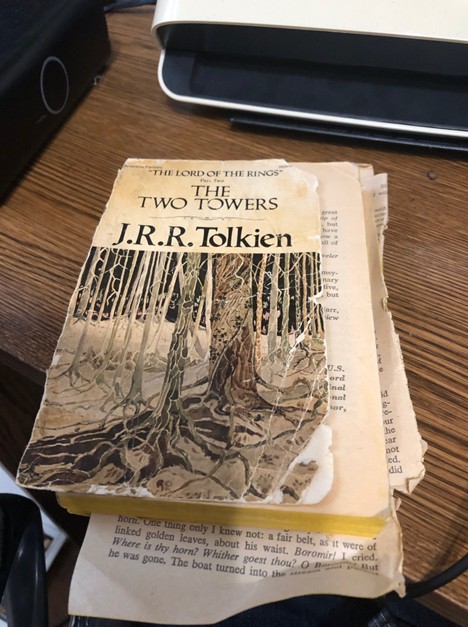
The first book I bought with my own money (you can read about how I earned that money here: A Penny A Minute) was the Lord of the Rings box set. I have posted a picture of the Two Towers to show you how much value I got for the few dollars I spent.
I remember buying them like yesterday at Quakerbridge Mall and using the money I earned from my first job. I raced home, put my name on the cover in case someone tried to take it, and devoured the books like I did the Quarter Pounder that I had bought with the remaining change.
I have now read those same books with pages falling out at least once a year. The first time I read them all in a weekend. I remember cowering in the bed as I read about the Black Riders for the first time and adding Frodo and Sam to my evening prayers.
Bonding with My Best Friend Over Tolkien
My best friend from elementary through middle school was Paul. He loved the Lord of the Rings as much as or more than me, and we discussed it endlessly. He also introduced me to the Lord of the Rings allusions in Led Zeppelin songs, such as Misty Mountain Hop and some Galadriel references in Stairway to Heaven.
He also had pictures from the Lord of the Rings calendars decorating his room. We parted ways in high school as our lives took different turns (The Road Goes Ever On!). But I will never forget the joy I had in discussing the latest calendar and references to LOTR by Led Zeppelin!
Love of Family
My Dad was a Steelworker, a no-nonsense Blue-Collar man. He did not care for fantasy, elves, or hobbits. In contrast, I was like Frasier to my Dad’s Marty Crane.
Throughout 1978, I looked for every news item on Ralph Bashki’s upcoming rendition of The Lord of the Rings. My dad got tickets for the opening day for the whole family because he knew how much I loved it. He also got me the LP soundtrack for Christmas.
The movie was not good, but my whole family sat through it. They sat through it and tried to cheer me up, as I was disappointed. I never felt more loved since my family showed kindness and support for something I cared about.
My Senior High School Thesis on Tolkien
I love to write and get as much joy from it as I do from reading LOTR. I feel exhilarated after writing each of my blogs, and unlike most, I love writing essays for school.
My senior thesis for High School was one of my favorites – Christ Imagery in the Lord of the Rings! I learned so much from studying this subject.
Unlike Lewis, who is allegorical in the Narnia series, Tolkien is more subtle but profound. Frodo, Aragorn, and Gandalf all represent elements of Christ. Frodo is the clearest as he carries the heavy burden to Mount Doom. Aragorn, as a disguised king, leads to a new kingdom. Gandalf is perhaps the least subtle as he arises from the dead in white after battling the Balrog.
Tolkien did not like allegory, but he understood the fundamental truth that our highest calling is to sacrifice. I still remember the exhilaration of getting an A on the paper, but more so the feeling that the LOTR revealed a more profound truth! I have learned from reading Tolkien’s Faith by Holly Ordway that Tolkien’s faith infused everything he did.
Falling for the Fellowship
I waited 23 years for the next movie version of The Lord of the Rings, The Fellowship of the Ring. My wife and I had four kids waiting for its arrival!
My oldest daughter Kate was old enough to stay up late to catch the movie with me on the first day. It came out the day before I had to lead an Oral presentation for the biggest deal in my career. Nevertheless, I got the only two last tickets available for the midnight showing on the first day.
My daughter and I waited anxiously in the last two seats behind a bar that partially obstructed my view. I was praying that it would not be like the earlier movie. I will not lie to you. When the Shire and Gandalf scene came on the screen, I wept tears of joy.
Peter Jackson had captured the essence of the books that defined my life: the decency of the Hobbits, the goodness of Gandalf, and the evil of the Dark Riders, which used to shake me in my bed so many years ago.
This will sound like the ultimate geek, but I count that first viewing of the Fellowship as one of the top 10 moments in my life. (By the way, it inspired me to win the most important job of my career the next day!).
Dancing in the Glade
I thought nothing would match the scene of the Shire, but a scene from the Tolkien movie did it. My favorite story from Tolkien is not LOTR but one chapter from the Silmarillion – Of “Beren and Luthien.” I love it for three reasons.
It examines the love between people of two cultures (Elves and Man). Beren and Luthien fight against all odds to defeat evil. Last and most important, it shows the never-ending love between a man and his wife.
For the uninitiated, Beren and Luthien Tinuviel represent J.R.R. Tolkien and his wife Edith. They were married for over 50 years. Edith was Tolkien’s muse and the anchor to his life. The image took my breath away as I sat beside my wife of 38+ years and thought of her in that glade. In the movie, they show Edith dancing in the woods in England, the image Tolkien explains in his poem below.
“The leaves were long, the grass was green, The hemlock-umbels tall and fair, And in the glade, a light was seen. Of stars in shadow shimmering. Tinuviel was dancing there. To the music of a pipe unseen, And the light of stars was in her hair, And in her raiment glimmering.” (Read more here – https://www.goodreads.com/quotes/tag/luthien).
Faith Lessons from Tolkien and St John Henry Newman
I knew Tolkien was a Catholic like me, but I realized further connections after reading Tolkien’s Faith. Tolkien’s mother took JRR and his brother Hillary to England. After her husband’s passing, his mother became Catholic in the Birmingham Oratory, where St. John Henry Newman resided. More than that, Father Francis Morgan, an aide of the Saint, was JRR Tolkien’s guardian when his mother passed.
This connection deeply moved me since the prayers and writings of St. John Henry Newman have been crucial to my faith formation. I discovered his prayers on a pilgrimage when we said one of his prayers each night during our return on our bus.
Written Words of a Loving Father.
I am now reading The Letters of JRR Tolkien, which contains 500 pages of Tolkien’s letters. The letters give insight into his books, college life, relationship with Inklings, and, most importantly, family.
Professor Tolkien’s most touching and instructive letters were to his son Christopher during WW II. To keep Cristopher’s spirits up, he shared his WW I experience. He also discussed the Lord of the Rings and had Christopher edit and develop maps for the book. He also wrote letters before WW I to his wife. His final letter before his passing was to his daughter Priscilla about his arrival at a friend’s house. In all, we see how Tolkien loved and instructed his family.
Eight events that shaped a life! Thank you, J.R.R. Tolkien and the makers of this film, for making this film that explains the life of this man who shaped me and so many others!
I am not worthy, but I'll try,
Moving forward till I die,
Though I misstep along the way,
I get closer day by day,
To life as you meant it to be,
Loving, blessed and Holy,

I don't deserve it, but I'll call,
To catch me when I fall,
To bring me home again,
In your presence, out of Sin,
With a heart meek and true,
In your paradise anew.

Jesus please hear my plea,
Remove the darkness, and let me see,
The path that I should take,
And the one that I should forsake,
On my wandering path to you,
And the mission I'm meant to do.
There was rain in the forecast for Duluth, the day after our glorious trek along the North Shore, spying Lake Superior from a hill near Gooseberry Falls, seabirds floating over the inland sea.
We decided to find an indoor attraction, longing for rain, we still did not want to get wet, since so much time had passed, and we feared being soaked so far from home.
The aquarium was just this side of the Aerial Bridge, where barges from around the world, floated unrestricted into their temporary home.
The fish and aquatic life in the tanks mirrored those, swimming freely in the depths of the Greatest Lake, Lake Trout, Walleye, and Sturgeon, some that lived over 100 years.
We had finished the first floor and were moving to the second, when something curious caught our eye. There, in the gift shop, was a solitary, plush Eagle.
My wife said, “Oh cute. Can we get it?” But I thought, Eagles are majestic birds of prey, Not to be sold as toys. Eagles must fly!
We proceeded to the second floor until, at the last corner, a lone Eagle with a heavy beak and piercing eyes.
It perched on a miserable little limb, staring wantonly through a screen at the wooded hills outside. It never turned toward us but only looked dejectedly at its former home, where we had roamed just the day before.
Eagles are meant to fly, to soar up toward the sun! To carry us to freedom and spread the word. What would St. John or Moses say to see nature’s herald trapped behind such a paltry barrier?
You can’t put God in a box, nor an Eagle behind a screen. Eagles are meant to fly!
This a parable story suitable for middle school students and above about the following excerpt from Matthew 11: 28-30. Questions follow.
28 “Come to me, all you who labor and are burdened, and I will give you rest.
29 Take my yoke upon you and learn from me, for I am meek and humble of heart; and you will find rest for yourselves.
30 For my yoke is easy, and my burden light.”
Story and questions copyright 2024 Don Grier.
The Yoking
I remember the conversation as clearly as yesterday when I was told that Jesús and I would be harnessed together for the plowing season.
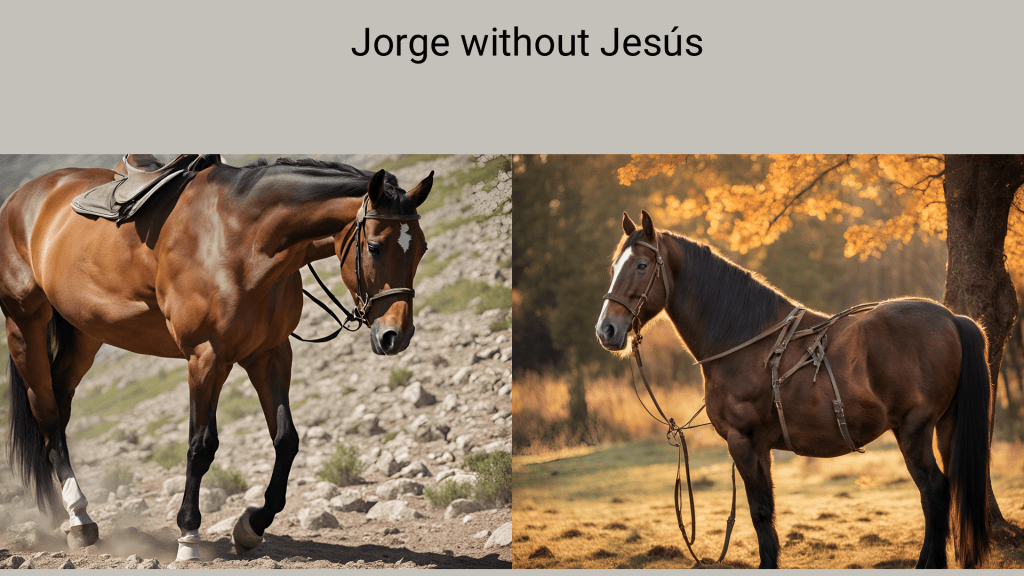
“I can’t believe Farmer Hector yoked me to old Jesús,” I neighed to my friend Buck. “What is the Farmer thinking? Does he want to plow the pasture all Spring? To leave the pasture fallow at harvest time. I thought he would pick someone young and strong like you, Buck, or Diablo since we would get it done quickly. What is he thinking?”
Stumble then Learn
But in hindsight, I was wrong! Jesús slowed me down initially when I was galloping too fast. But I soon realized slower was better in the rocky pasture, where stones can splinter a hoof, as I did one brisk morning when I felt frisky. But to my surprise, old Jesús pulled us long and more than made up for my injury during the days I was recovering.
After I was healed, I was ready and raring to go. Jesús, let me plod on, seeming to take no interest in our work. He let me carry a good bit of the load since I had learned my lesson about the rocks and looked to avoid them. It tested my patience and resilience, but I was determined to do my best.
Jesús’s seeming lack of interest worried me as we approached the Hill of Calvaro. With the end of spring coming, we had just a few days left to get the plowing done. Farmer Hector loved to terrace the hill because the crops grew better in the cooler climate.
Climbing the Hill of Calvaro
Jesús again surprised me as he picked up the pace. It took both of us to pull up that devilish hill. I saw Jesús matching my steps and pulling me forward when I faltered. The last drive took all Jesús had, but he did not complain as he lay panting and heaving. Until, at last, his heart gave out just as we crested the Hill of Cavaro. Farmer Hector buried him there where he fell, on that hallowed hill. Jesús died at 33 years, a ripe age for a plow horse.
The Lesson
A few days later (three, I think), Farmer Hector and I stopped at a lake before returning to the homestead. We looked up and were amazed. In the deep blue sky was one lone cloud shaped like old Jesús. Farmer Hector said under his breath, “Could it be?” He just shook his head doubtfully. But I could have sworn, in the whispering wind, I heard Jesús whinny, “Remember.”
And I have tried to remember! I may not be as patient and as strong as old Jesús. Nor has the harvest from the fields I have plowed ever matched our harvest that Autumn. But I try as best I can to impart the lessons that I learned while yoked to Jesús.
Questions
1. Think of a time when you did something without Jesus by your side. How did that turn out?
2. Now, how about a time when Jesus carried the load for you?
3. Have you ever thought that Jesus was no longer with you? In hindsight, was that a time for growth?
4. What crosses do you have, and how might walking yoked to Jesus help you?
This second two-part blog series focuses on practices that nurture the body and soul. The first blog of the series, Good for the Body, Good for the Soul, covered five powerful practices that can help you promote your soul and, in turn, improve your health and disposition. This blog will cover how to stack in sequence or, better yet, run body and soul habit combinations in parallel for a double whammy. You can also hear both blogs with additional info in podcast form by subscribing to the Change Well podcast, available at our website link here or on Spotify or Apple Podcast.
The concept of habit stacking, as introduced in Atomic Habits, helps to establish beneficial habits more quickly. Here is a simple example. You need to take medication each day, which is an established habit. However, you also want to institute the beneficial habit of drinking sixty-four ounces of water. A way to develop the new habit is to place a water bottle next to your pill container. Presto! Now, you have a ready-made container with the right amount of water next to your pill box. You need to wash down the pills and, in so doing, start drinking the water you need for the day!
I used this habit stacking idea to benefit significantly during my weight loss journey of losing 150+ pounds in under a year. My physical transformation recovered my body, but my soul was still suffering. I was still sometimes a curmudgeon, and my peace of mind, though better, could still get rattled. So, I decided to piggyback some new soul habits with some of my firmly established body habits. I will provide examples of my body and soul habit stacks and scrums, more on that term later, that relate to my faith practice – Roman Catholicism. However, I will try briefly suggesting how these may be adapted based on my research.
The first stack I tried was what I called the Texas Three Step. I had already established the Texas Two Step method during my weight loss journey. Each Saturday morning, I would get up at 6:00 and work out for an hour and a half before attending my WW meeting. It was good for the body!
Two years ago, my parish established Saturday morning prayers (called Lauds in the Liturgy of the Hours) combined with Adoration on Saturday in the early morning. This led to my new and improved Texas three-step Saturday ritual. I now get up on Saturday at 5 AM and exercise to get as close to my weight target as possible. I then went to my Church and prayed for an hour to clear the weight off my soul. After praying (and sometimes Mass), I head to my WW meeting to share wellness ideas with my friends, now at the 9:30 WW Meeting. In one fell swoop, I shed weight on body, soul, and shared fellowship to start the weekend right!
I next created a daily body and soul stack. It was similar to the first stack but less formal without group activities. I had established an exercise habit that followed my morning water and medication discussed earlier. I decided to add a prayer meditation after working out and subsequently stretching. This worked well initially. I got my heart rate up with exercise, then began slowing it down with stretching, and lastly, I established a contemplative prayer. The exercise helped my prayer focus, and the prayer helped me slow down and heal my body. However, I ran into a problem with time management. I skipped exercises if I had a late night the night before. Or if I thought I had enough but limited time, I rushed both. I began to put back on some weight because I prioritized the spiritual aspect. I had to do something to bring them together. That is when I came up with the idea of body and soul scrums while listening to a book on product management!
Scrum is likely known to rugby fans and software developers but may not be as well known to others. Scrum in software development focuses, among other things, on parallel activities. The origin of Scrum as a framework goes back to an article in the Harvard Business Review in 1986. “The New New Product Development Game” by Takeuchi and Nonaka described how first-class products are developed in cross-functional teams with an ‘all-simultaneous approach.’
Therefore, a body and soul scrum is when you simultaneously execute body and soul habits. What is an example? I will use one of the oldest ones, perfect for the beginning of Christian Lent and practiced by many faiths, including Christianity, Islam, Buddhism, Jainism, Hinduism, Judaism, and Taoism – Fasting and prayer!
Intermittent fasting is now all the rage for weight loss. Still, before my Silicon Valley colleagues adapted it to shed pounds, fasting was used by saints and spiritual leaders to deny themselves and develop spiritually. It is the ultimate body and soul scrum, cleansing the body and healing the soul. Today, on Ash Wednesday, I fast as part of my religion. But also practice fasting more regularly to detoxify the body and soul. I have put a link in the show notes to an article from the NIH on religious fasting.
Besides fasting and prayer, I have developed other body and soul habit scrums I use weekly. They help me manage my time while packing a one-two holistic punch of well-being.
Mike and Bike. In these previous blogs, I documented my love of cycling on our companion blog site: Peloton Pandemic Pandemonium, Don’t Stop Believing: A Weight Loss Journey in Three Intervals. My respect and admiration for Father Mike Schmitz are right up there with this love. He was instrumental in my wellness journey, both body and soul. I started listening to his homilies after a Lenten retreat at our parish and would listen to his homilies while using the elliptical training. With the launch of the Bible in the Year podcast, I have taken it to a new level with Mike and Bike. At least three times weekly, I take a 20-minute scenic ride on the Peloton and turn off the sound. I then turn on the daily Bible in the Year podcast and listen to the Lord’s word while circumventing the pathways of Rome, Paris, or the Alps. With each Mike and Bike, I grow in knowing the Lord’s plan for me and building my quads! You can download the Bible in the Year podcast here Bible in a Year if you want to try it.
Marching with Mary. Last May, I participated in a fundraiser to raise money for the mental wellness of veterans and soldiers. The StopSoldierSuicide.org fundraiser called for me to march 50 miles during May while carrying a 50 lbs. ruck. My 60-year-old body does not march fast with 50 lbs. on my back. It was seriously cutting down on my prayer time. I therefore decided to add reciting a silent Rosary while marching. A rosary is a series of prayers and meditations that use a unique prayer bead called a rosary. As a Catholic, I believe this prayer practice was passed on to us from Mary through St. Dominic. Other religious practices have prayer beads to recite prayers, chants, and mantras. This Marching with Mary practice allowed me to add over fifty prayers and meditations on each ruck march. In this way, I was not only able to raise money for Veterans, but I could pray for them, too.
Hinge and Hallow. One of the reasons I ambled while marching was weakness in one of my knees. To help with this issue, I use a physical therapy application called Hinge Health. This application has a set of tailor-made exercises to help strengthen my knee. While doing my Hinge exercises, I listen to the Hallow mindfulness application https://hallow.com/. This application is an excellent resource for all Catholics and includes everything from The Daily Miracle meditation to Gregorian Chants to books from doctors of the Church. I highly recommend it, and you may have seen their ad at the recent Superbowl, but there are other similar applications, such as Calm, that are secular or of a different faith that others can use. This combination helps me fix my knee and my disposition all at the same time!
Exodus for the soul (and body). The last body/soul scrum is the one that launched it all. Two years ago, I participated with a group of men in my church in Exodus 90. This program is a ninety-day spiritual exercise for men based on three pillars: prayer, asceticism, and fraternity. Part of the ascetic practice is daily rigorous exercise, excluding alcohol and sweets, and days of fasting. It also includes daily prayer practice. It gave me the idea for the other four practices previously stated. I highly recommend it for all Catholic Men who need a wake-up call for both body and soul.
I hope these ideas can help you as they help me improve your body and soul.
This is the first of two in a blog series on the importance of mindfulness. You can also hear this blog read and sung on Episode 17 of our Change Well Podcast
There is a definite connection between body and soul. Be happy, feel better. Share kindness, win friends, and feel good. On the other hand, when you are stressed or miss your workout, it is not always easy to turn the other cheek. Common sense confirms recent studies that caring for others improves the well-being of those you helped and your own!
I have struggled to learn this lesson. I am naturally an intense person and a bit of a curmudgeon—a person who is sometimes not kind to others, particularly myself. Driven to achieve, I occasionally drive other people out and beat myself up. This often leads to regret, guilt, and, more often than not, an eating binge. A happy person is a healthy person, and vice versa.
That is why when I started on my weight loss journey, it was just as important to cleanse my soul as my body. I took several measures to help me improve my disposition and, correspondingly, my health. This is what I did.
Write in my Kindness Journal – I journal six minutes daily in a Kindness Journal. It sets my daily goals for being a better person and helps me envision the person I want to become. It also provides me a place to recognize those items the day before for which I was most pleased (being kind to myself) and reflect on those who were kind to me. Lastly, I set my intention on one kind of beneficial act that I will do to make the world better for others. I use this particular journal, but you can use another Kindness Journal
Record happy thoughts in HappyFeed – In addition to writing in my Kindness Journal, I record three things I am so glad about each day using the iOS application HappyFeed. You do not always have to write something earth-shattering. Sometimes, I write something like, “I got 8 hours of sleep last night!” The key is to dwell on what makes you happy rather than what makes you stressed.
Pray, Meditate, and Give Thanks – There is no room for worry when thankful. You feel better about yourself and also those around you. Also, the Power of Thanksgiving can break through even the darkest hour. I spoke about this in the following blog. The Power of Thanksgiving
Help Others – Helping others benefits those you help and others. First, when you allow others, you focus on them, not the issues you face. Also, you are so preoccupied with the task at hand, whether it is building a house for Habitat for Humanity or walking to raise funds to combat cancer, that you often do not have time to overeat.
Smile – The simple act of smiling lightens your mood and that of others. Better yet, laugh; it is the best medicine, as they say.
Working on your heart and soul can make you a better person and help you lose weight – a double whammy (ok enough with the W’s). I have glorified this concept by establishing my most sacrosanct scheduled time of each day – Body and Soul Time. If you look at my calendar, you will see 6:00 – 8:00 AM each day, blocked out as Body and Soul time. This is when I do a weekly set of body and soul combos, combining mindfulness and prayer with exercise—more on next week’s blog.
But for now, let me close with, of all things, the importance of being third. A few weeks back, when thinking about Dr. King’s legacy and other selfless people like Gandhi and Mother Theresa, I tried to find the common thread that pulled them all together. And I realized it was because they were each Third – behind their religious beliefs and their care for others. I then thought about how hard it is to be Third in my life and thought of that classic song – “It’s Not Easy Being Green.” So, I decided to write this song/poem to the tune of It’s Not Easy Being Green. I hope you enjoy it. My thanks to Kermit!
It’s Not Easy Being Third

It’s not easy being Third,
Putting yourself behind our human family and God’s word,
And people tend to pass you over,
Because you’re not in the latest fashion,
or have cool toys like some other guys.

But Third’s the purpose in your life,
And Third can help end earthly strife,
And Third can change the course of a nation,
Or build bridges to others, or define history.

When Third is what you are meant to be,
It could make you ponder why, but why ponder?
Why ponder, I am Third, it’s written on our Souls,
And it is where we are meant to be.











 Be Good Not Great!